
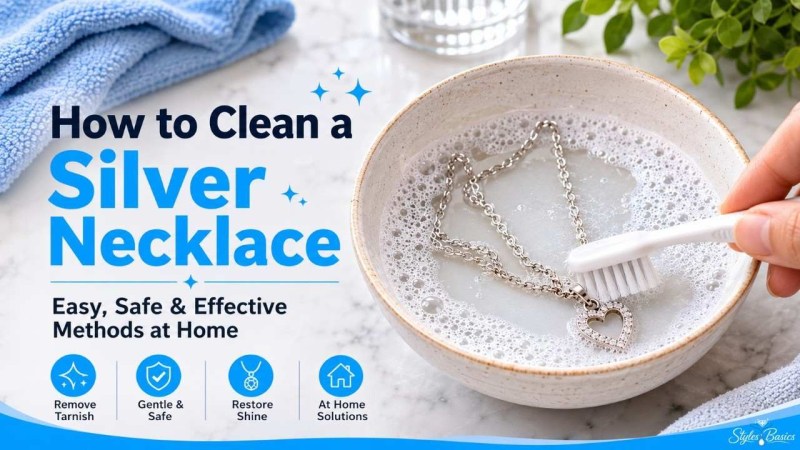
Silver necklaces are popular because they are timeless, versatile, and easy to style with different outfits. However, regular wear can cause silver to lose its brightness over time. Exposure to air, moisture, sweat, and everyday products can create tarnish that makes the necklace look dull or darker.
Cleaning a silver necklace at home is simple when you use the right approach. Since necklaces have small links, clasps, and detailed areas, dirt can easily collect in places that are difficult to reach. Gentle cleaning helps remove buildup while protecting the surface of the silver.
This guide explains safe methods to clean a silver necklace at home, remove tarnish, restore shine, and build better jewelry care habits. For a broader cleaning routine covering different jewelry types, you can also follow our main guide on how to clean jewelry at home.
Why Silver Necklaces Turn Black and Lose Shine
Silver does not usually become dirty because of the metal itself. Most discoloration happens because silver reacts with its surroundings or collects residue from daily wear. Knowing what causes tarnish makes it easier to protect your necklace.
Exposure to Air and Moisture
Silver naturally reacts with elements in the environment, which can cause tarnish to develop over time. Humidity, water exposure, and improper storage can make this process happen faster.
Sweat and Skin Oils
Daily wear transfers sweat and natural oils from your skin onto the necklace. These residues collect around links and the clasp, making the silver appear less shiny.
Perfume, Lotion, and Beauty Products
Products like perfume, moisturizer, sunscreen, and hair products can leave a layer on silver. Over time, this buildup can make the necklace look cloudy or dull.
Improper Storage
Leaving a silver necklace exposed can increase contact with air and moisture. Storing it incorrectly can also lead to scratches, tangling, and faster tarnishing.
How Often Should You Clean a Silver Necklace?
A silver necklace worn every day usually needs more frequent care compared with a piece worn occasionally. Regular light cleaning helps remove oils and residue before they create heavier tarnish.
For daily wear necklaces, a gentle cleaning routine every few weeks can help maintain shine. A quick wipe after wearing can also reduce buildup and keep the necklace looking fresh.
Occasionally worn silver necklaces may only need cleaning when they appear dull or show signs of tarnish. Before long-term storage, cleaning and drying the necklace properly can help prevent future discoloration.
The type of silver also matters. Sterling silver, silver-plated jewelry, and pieces with gemstones may require different levels of care. Delicate designs should always be cleaned gently.
Essential Tools for Cleaning a Silver Necklace at Home
Cleaning a silver necklace does not require expensive products. Simple household supplies can work well when used carefully and correctly.
Mild Dish Soap
Mild dish soap helps remove everyday oils, sweat, and surface dirt. It is one of the safest options for routine silver necklace cleaning.
Warm Water
Warm water helps loosen buildup and makes cleaning easier. Avoid very hot water because delicate jewelry components may be affected.
Soft-Bristled Toothbrush
A soft toothbrush helps reach small spaces between chain links and around the clasp. It should be used gently to avoid scratching the silver surface.
Microfiber or Soft Cloth
A soft cloth is useful for drying and polishing after cleaning. It removes moisture and helps bring back the necklace’s natural shine.
Silver Polishing Cloth
A silver polishing cloth is designed to remove light tarnish and improve the appearance of silver jewelry. It works well for maintenance between deeper cleanings.
Step-by-Step Methods to Clean a Silver Necklace
Silver necklaces require gentle handling because their chains contain small links that can collect dirt. The best method depends on the amount of tarnish and the condition of the necklace.
1. Mild Soap and Water Method
This method is ideal for silver necklaces that are worn regularly but only have light dirt, oils, or surface buildup. Mild soap gently removes everyday residue without being too harsh on the silver surface. It is a simple maintenance method that helps keep necklaces bright and clean.
This method works well for silver chains, pendants, and everyday jewelry pieces. It is especially useful when you want regular cleaning without using stronger tarnish-removing methods.
Supplies Needed: Mild dish soap, warm water, soft cloth, soft-bristled toothbrush
Steps:
- Prepare the Solution: Mix a few drops of mild dish soap into a bowl of warm water.
- Soak the Necklace: Place the silver necklace in the solution for 5 to 10 minutes to loosen dirt and oils.
- Clean the Links: Use a soft toothbrush to gently clean between chain links, around the clasp, and detailed areas.
- Rinse: Rinse the necklace carefully with clean water to remove all soap residue.
- Dry and Polish: Pat the necklace dry with a soft cloth and gently polish to restore shine.
2. Baking Soda and Water Method
This method is suitable for silver necklaces with mild tarnish or areas that look darker than usual. Baking soda creates a gentle cleaning paste that helps lift surface discoloration while improving brightness.
It works best for plain silver necklaces without delicate gemstones or fragile finishes. Use gentle pressure because excessive rubbing can affect the surface.
Supplies Needed: Baking soda, warm water, soft cloth, soft toothbrush
Steps:
- Make the Paste: Mix baking soda with a small amount of water until it forms a smooth paste.
- Apply the Paste: Place a small amount on tarnished areas of the necklace.
- Clean Gently: Rub the necklace softly using a cloth or soft toothbrush.
- Rinse: Remove all baking soda residue with clean water.
- Dry and Buff: Dry completely and polish with a soft cloth.
3. Aluminum Foil and Baking Soda Method
This method is useful for silver necklaces with heavier tarnish or darker discoloration. It works through a chemical reaction that helps loosen tarnish from the silver surface. This method is commonly used for plain silver pieces that need deeper cleaning.
It is best for sterling silver necklaces without delicate gemstones, special coatings, or fragile finishes. After using this method, proper rinsing and drying are important to remove any remaining residue.
Supplies Needed: Aluminum foil, baking soda, warm water, bowl, soft cloth
Steps:
- Prepare the Bowl: Line a small bowl with aluminum foil, keeping the shiny side facing upward.
- Add the Solution: Fill the bowl with warm water and add a small amount of baking soda.
- Soak the Necklace: Place the silver necklace into the solution and allow it to sit for a few minutes.
- Remove Tarnish: Take the necklace out and gently wipe away loosened tarnish with a soft cloth.
- Rinse and Dry: Rinse thoroughly with clean water and dry completely before storing.
4. Silver Polishing Cloth Method
This method is ideal for silver necklaces that only need a quick refresh or have light surface dullness. A silver polishing cloth helps remove fingerprints, oils, and minor tarnish while improving the necklace’s shine.
This is a great maintenance method because it does not require soaking or additional cleaning solutions. It works especially well between deeper cleanings to keep silver looking polished.
Supplies Needed: Silver polishing cloth
Steps:
- Prepare the Necklace: Place the necklace on a clean, soft surface.
- Polish Gently: Rub the cloth across the silver surface using light movements.
- Focus on Dull Areas: Spend extra time on areas where tarnish or fingerprints are visible.
- Avoid Rough Handling: Do not pull or stretch the chain while polishing.
- Finish the Process: Use a clean area of the cloth to buff the necklace and restore shine.
5. Vinegar and Baking Soda Method
This method can help with stubborn tarnish on plain silver necklaces. Vinegar’s acidity helps loosen oxidation, while baking soda supports the cleaning process. It should be used carefully because stronger cleaning reactions are not suitable for every type of silver jewelry.
This method is best for simple silver necklaces without gemstones or delicate finishes. Always rinse the necklace thoroughly after cleaning to remove any remaining solution.
Supplies Needed: White vinegar, baking soda, warm water, soft cloth
Steps:
- Prepare the Solution: Mix a small amount of vinegar with warm water and add baking soda carefully.
- Apply to the Necklace: Place the silver necklace into the solution briefly.
- Remove Tarnish: Allow the solution to loosen discoloration before gently wiping the surface.
- Rinse Thoroughly: Wash the necklace with clean water to remove all residue.
- Dry and Polish: Use a soft cloth to dry and restore the necklace’s shine.
Want to Learn How to Clean Silver Jewelry At Home?
Discover safe and simple ways to clean silver jewelry at home with our complete cleaning guide.
Explore the Complete Silver Jewelry Cleaning Guide ↗How to Clean a Silver Necklace With Gemstones Safely
Silver necklaces with gemstones should always be cleaned more carefully. Some gemstones can be sensitive to acids, heat, or long exposure to water, which means traditional silver cleaning methods may not always be suitable.
For gemstone silver necklaces, use mild soap and warm water with a soft cloth or soft brush. Focus on cleaning the silver parts around the stone while avoiding harsh rubbing directly on the gemstone.
Avoid strong methods like vinegar, lemon, or baking soda unless you know the gemstone can handle them. When unsure, gentle cleaning is the safer option.
Mistakes to Avoid When Cleaning a Silver Necklace
Avoiding common mistakes helps protect your necklace from scratches, damage, and unnecessary wear.
Using Harsh Chemicals
Strong chemicals can damage silver finishes and affect delicate parts of the necklace. Avoid household cleaners, bleach, and other aggressive products.
Scrubbing Too Hard
Silver is a soft metal, and aggressive brushing can create scratches. Always use gentle movements when cleaning chain links.
Using Rough Materials
Paper towels, rough fabrics, or hard brushes can damage the surface. Soft microfiber cloths and jewelry brushes are safer choices.
Leaving the Necklace Wet
Moisture can speed up tarnishing. Always dry your silver necklace completely after cleaning.
Cleaning Every Type of Silver the Same Way
Sterling silver, silver-plated jewelry, and gemstone pieces may require different care. Using the wrong method can damage the finish.
How to Prevent a Silver Necklace From Tarnishing
Simple care habits can help keep your silver necklace shiny and reduce frequent cleaning.
Store It Properly
Keep your silver necklace in a dry place, preferably inside a jewelry pouch or airtight container. This reduces exposure to air and moisture.
Wipe It After Wearing
Use a soft cloth after wearing your necklace to remove sweat, oils, and product residue before they create buildup.
Avoid Contact With Chemicals
Remove your necklace before applying perfume, lotion, swimming, or using cleaning products. These substances can speed up tarnishing.
Keep It Away From Humidity
Bathrooms and humid areas can increase tarnish. Store silver jewelry in a cool, dry location.
Separate From Other Jewelry
Keeping silver necklaces separate prevents scratches, tangles, and unnecessary friction with other pieces.
Discover More From Styles Basics!

Daith Piercing Cost: Average Prices, Jewelry & What to Expect
The daith piercing cost depends on several factors, including the studio, location, piercer’s experience, jewelry material, and whether the advertised…


Daith Piercing Bump: Causes, Treatment & When to Worry
A daith piercing bump can appear as a small raised area, swelling, or lump around the piercing. While seeing a…

Daith Piercing Jewelry: Best Styles, Materials & Sizes
Daith piercing jewelry needs to balance comfort, proper fit, material quality, and personal style. The right piece can make a…

Daith Piercing Healing Time: How Long Does It Take to
A daith piercing can look much better within a few weeks, but that does not necessarily mean it is fully…

Daith Piercing Pain: How Much Does a Daith Piercing Hurt?
Getting a Daith piercing involves passing a needle through the inner cartilage fold of the ear, so some discomfort is…

Daith Piercing Aftercare: Do’s, Don’ts & Healing Tips
A new daith piercing needs patience and gentle care while the cartilage heals. Because the daith passes through a fold…
When Should You Get a Silver Necklace Professionally Cleaned?
Home cleaning works well for regular maintenance, but professional cleaning may be better for valuable or delicate pieces.
Consider professional cleaning if your necklace has:
Heavy Tarnish
Deep discoloration that does not improve with gentle cleaning may require specialized tools.
Loose Stones or Damaged Parts
A professional can inspect the necklace and repair issues before cleaning.
Antique or Valuable Jewelry
Older or valuable silver necklaces may need special handling to protect their condition.
Complex Designs
Intricate necklaces with detailed settings may be difficult to clean safely at home.
Conclusion
A silver necklace can lose its shine over time because of tarnish, oils, moisture, and daily exposure. However, with the right cleaning methods and regular maintenance, you can restore its brightness and keep it looking beautiful for longer.
Gentle cleaning, proper storage, and careful handling are the key parts of silver necklace care. Whether you are removing light buildup or dealing with tarnish, choosing the right method helps protect the necklace while improving its appearance.
For easy access while cleaning, you can download this complete Silver Necklace Cleaning Guide as a PDF. Keep it saved as a quick reference with cleaning methods, prevention tips, and care instructions.
Frequently Asked Questions
How do I clean a silver necklace at home?
The safest way to clean a silver necklace at home is with mild soap, warm water, and a soft brush. This removes dirt, oils, and everyday buildup without damaging the silver.
Why does my silver necklace turn black?
Silver turns black because it reacts with elements in the air and develops tarnish. Sweat, moisture, and product residue can make tarnishing happen faster.
Can I use baking soda to clean a silver necklace?
Yes, baking soda can help remove mild tarnish when used gently. Avoid aggressive rubbing because it may scratch softer silver surfaces.
How often should I clean my silver necklace?
Daily wear necklaces may need cleaning every few weeks, while occasional-use necklaces can be cleaned when they look dull or tarnished.
Can I clean a silver necklace with gemstones?
Yes, but use gentle methods like mild soap and water. Avoid strong cleaning solutions unless you know they are safe for the gemstone.
What is the safest way to remove tarnish from a silver necklace?
A silver polishing cloth or mild soap method is usually the safest option. Stronger methods should be used carefully.
Can toothpaste clean a silver necklace?
It is not recommended because toothpaste can be abrasive and may create small scratches on silver.
How do I keep my silver necklace shiny longer?
Store it properly, wipe it after wearing, avoid chemicals, and reduce exposure to moisture.
Can I soak my silver necklace overnight?
No. Long soaking is unnecessary and may affect delicate parts of the necklace. Short cleaning periods are safer.
Why does my silver necklace look dull after cleaning?
Dullness can happen due to leftover residue, incomplete drying, or deeper tarnish. Proper rinsing and polishing usually improve the shine.
