
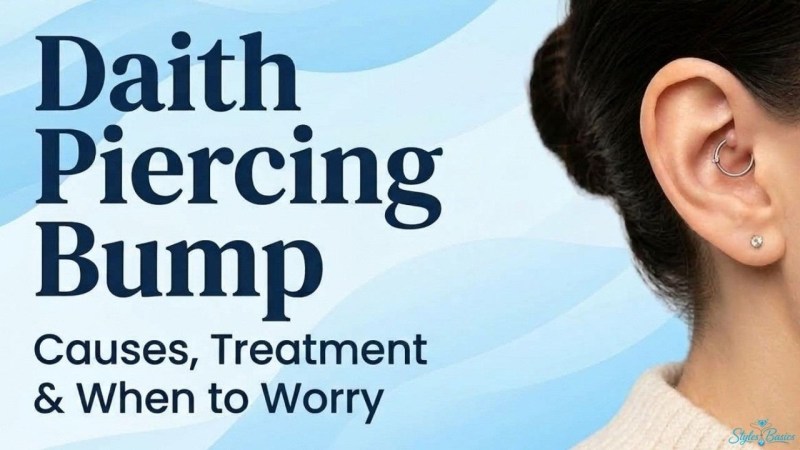
A daith piercing bump can appear as a small raised area, swelling, or lump around the piercing. While seeing a bump can be concerning, not every bump means that your daith piercing is infected.
Irritation, pressure, friction, jewelry problems, cleaning products, and other factors can affect a healing piercing. The Association of Professional Piercers notes that bumps and irritation around piercings can have different causes, including mechanical stress, cleaning products, and jewelry materials.
Because a daith piercing passes through ear cartilage and can take many months to heal, it is important to avoid treating every bump aggressively. In many cases, reducing irritation and following appropriate aftercare is more useful than repeatedly touching, cleaning, or changing the jewelry.
This guide explains what a daith piercing bump may mean, common causes, what you can do, what to avoid, and when you should seek professional medical advice.
What Is a Daith Piercing Bump?
A daith piercing bump is a raised area that develops around or next to a daith piercing.
The appearance can vary. A bump may be:
- Small and localized around the piercing
- Red or darker than the surrounding skin
- Tender or sensitive
- Associated with swelling
- Accompanied by crust or normal healing discharge
- Persistent or intermittent
A bump alone does not tell you exactly what is causing the problem.
The Association of Professional Piercers explains that different lumps, bumps, and skin irritations can develop around piercings and may result from mechanical stress, cleaning products, jewelry materials, or a combination of factors.
That is why it is better to look at the whole picture, including pain, swelling, discharge, jewelry fit, recent trauma, and how the piercing has been cared for.
Is a Daith Piercing Bump Normal?
A small amount of irritation can occur while a new daith piercing is healing.
The APP notes that early healing can include localized swelling, tenderness, itching, discoloration, and a whitish-yellow secretion that can form crust on the jewelry. It also explains that excessive friction, pressure, movement, or vigorous cleaning can irritate a healing piercing.
So, a small bump does not automatically mean something is seriously wrong.
However, a bump that is becoming increasingly painful, hot, swollen, or associated with pus or systemic symptoms should not simply be assumed to be normal healing.
What Causes a Daith Piercing Bump?
There is no single cause of every piercing bump. Several factors can contribute to irritation around a healing daith piercing.
1. Friction and Pressure
Repeated pressure is one of the most important things to consider.
Your daith piercing can be disturbed by:
- Sleeping directly on the piercing
- Headphones or earbuds
- Hair catching on the jewelry
- Hats or headbands
- Clothing or towels
- Accidentally hitting or rubbing the ear
- Repeatedly touching the jewelry
The APP specifically warns that friction, pressure, excessive motion, and other forms of trauma can contribute to irritation and prolonged healing. Sleeping directly on a healing cartilage piercing can also cause irritation.
If your bump appeared after repeatedly irritating the area, reducing that irritation may be an important part of allowing the piercing to settle.
2. Jewelry That Does Not Fit Properly
Jewelry size and style matter during healing.
Jewelry that is too tight, poorly fitted, or unsuitable for the piercing can contribute to pressure and irritation. Choosing appropriate daith piercing jewelry is therefore an important part of reducing unnecessary trauma during healing.
The APP recommends having a qualified piercer handle jewelry changes or downsizing during healing unless there is a problem with the existing jewelry.
If you think your jewelry is pressing into the tissue, sitting at an unusual angle, or repeatedly catching on things, have a professional piercer assess it rather than trying to force a change yourself.
3. Excessive Cleaning
More cleaning is not necessarily better.
Over-cleaning can irritate a healing piercing and delay healing. The APP recommends sterile saline wound wash and specifically advises against harsh products such as alcohol and hydrogen peroxide.
Repeatedly scrubbing a bump or applying multiple products can create additional irritation rather than solving the original problem.
4. Touching or Moving the Jewelry
It can be tempting to twist, rotate, or move the jewelry when a bump appears.
That is generally not helpful.
The APP advises leaving the piercing alone except when cleaning and states that rotating or moving jewelry during cleaning is unnecessary and may irritate the piercing.
Try to avoid checking the bump repeatedly with your fingers.
5. Jewelry Material or Surface Problems
Jewelry material can also play a role in irritation.
The APP notes that skin irritation and healing problems can sometimes be related to jewelry materials, and metal sensitivities can cause complications.
If irritation began after a jewelry change, have the jewelry evaluated by a qualified piercer. Avoid repeatedly switching jewelry on your own while the piercing is still healing.
6. Pressure From Sleeping
Daith piercings are located in an area that can be difficult to protect while sleeping.
Pressure from a pillow can irritate a healing cartilage piercing. The APP specifically recommends avoiding direct pressure on healing cartilage piercings because it can cause irritation and may affect the piercing angle.
If the bump seems worse after sleeping on that side, reducing direct pressure may help.
7. Hair, Headphones, and Everyday Contact
Everyday objects can cause repeated irritation without you realizing it.
Hair can catch on jewelry. Headphones can press against the ear. Towels can snag the jewelry. Phones and other objects can also come into contact with the area.
During healing, pay attention to anything that repeatedly touches or pulls on the piercing.
Irritation Bump vs. Infected Daith Piercing
One of the most important questions is whether the bump is simply irritated or whether there could be an infection.
You cannot reliably diagnose the cause of a bump from its appearance alone.
Possible signs of irritation
Irritation may be more consistent with:
- A localized small bump
- Mild tenderness
- Occasional sensitivity
- Symptoms that follow pressure or friction
- Irritation after touching or cleaning
- No significant worsening of redness, swelling, or pain
These observations do not prove that a bump is only irritation, but they can provide useful context.
Possible signs of infection
Cleveland Clinic notes that symptoms such as redness, inflammation, discharge, pain, itching, or sensitivity can occur with an infected piercing, particularly when symptoms persist or worsen rather than improving.
NHS guidance also identifies increasing swelling, pain, heat, significant redness or darkening, blood or pus, and feeling hot, shivery, or generally unwell as warning signs associated with infection.
With cartilage piercings, infection deserves particular attention. Cleveland Clinic explains that perichondritis, an infection involving the tissue around ear cartilage, can cause pain, redness, and swelling and can require prompt treatment.
If you suspect that your daith piercing is infected, seek medical advice rather than attempting to diagnose or treat the infection yourself.
Wondering How Much a Daith Piercing Hurts?
Learn what daith piercing pain may feel like, how jewelry fit and pressure can affect discomfort, and what to expect during the healing process.
Read the Daith Piercing Pain Guide
What Should You Do About a Daith Piercing Bump?
If the bump appears to be associated with irritation and you do not have signs of infection, focus on reducing unnecessary trauma.
1. Leave the Jewelry Alone
Do not repeatedly twist, spin, push, or pull the jewelry.
The APP recommends leaving a healing piercing alone except when cleaning and avoiding unnecessary movement.
2. Use Appropriate Aftercare
Follow a simple aftercare routine rather than experimenting with multiple products.
The APP recommends sterile saline wound wash labeled for wound care, with 0.9% sodium chloride as the only ingredient when possible. It also advises against harsh products such as alcohol and hydrogen peroxide.
For a detailed routine, see our guide to daith piercing aftercare.
3. Reduce Pressure and Friction
Look for anything that repeatedly irritates the piercing.
This could include:
- Sleeping on the piercing
- Tight headphones
- Hair catching on the jewelry
- Rough towels
- Frequent touching
- Hats or headbands
- Accidental bumps
Removing the source of repeated irritation can be more useful than repeatedly treating the bump itself.
4. Do Not Pop or Squeeze the Bump
Avoid squeezing, piercing, draining, or picking at the bump yourself.
These actions can further traumatize the tissue and introduce additional contamination.
5. Have the Jewelry Checked
If the jewelry seems too tight, too large, poorly positioned, or irritating the tissue, have a qualified professional piercer assess it.
Do not force a new piece of jewelry through a healing piercing.
The APP advises that jewelry changes during healing should generally be performed by a qualified piercer unless there is a problem with the initial jewelry that requires attention.
Should You Remove Daith Jewelry if You Have a Bump?
Not automatically.
A bump does not by itself mean that the jewelry should be removed.
If infection is suspected, the APP advises discussing with a physician whether quality jewelry or an appropriate substitute should remain in place.
Removing jewelry without professional guidance can also make reinsertion difficult because a piercing channel can shrink quickly.
If you are concerned about a bump, have the piercing evaluated rather than immediately removing the jewelry yourself.
Should You Change Daith Jewelry Because of a Bump?
Changing jewelry may not solve the underlying problem and can create additional trauma if the piercing is still healing.
Before changing jewelry, consider:
- How old the piercing is
- Whether it is fully healed
- Whether the current jewelry fits properly
- Whether the jewelry material is appropriate
- Whether there has been repeated pressure or trauma
- Whether there are signs of infection
If the piercing is still healing, a professional piercer should assess the jewelry before you replace it.
For more information about the healing process, see our guide to daith piercing healing time.
Can a Daith Piercing Bump Go Away on Its Own?
An irritation-related bump may improve when the source of irritation is removed, but there is no universal timeline.
Healing depends on factors such as:
- The age of the piercing
- The cause of the irritation
- Jewelry fit and material
- How frequently the area is disturbed
- Individual healing differences
- Whether there is an underlying medical issue
Do not assume that a bump will disappear simply because you stop noticing pain.
The APP points out that piercings can appear healed externally before the internal tissue has completed healing.
How Long Does a Daith Piercing Bump Take to Heal?
There is no reliable single number of days or weeks that applies to every daith piercing bump.
A bumps caused by ongoing irritation may persist if the source of irritation continues. Once the irritation is addressed, the area may gradually settle, but healing can take time.
Avoid judging the process day by day or repeatedly changing your routine because the bump has not disappeared immediately.
If the bump continues to grow, becomes increasingly painful, or develops other concerning symptoms, seek professional evaluation.
Can a Daith Piercing Bump Be a Keloid?
Not every bump around a piercing is a keloid.
Keloids are a specific type of raised scar tissue, and diagnosing a skin growth requires proper clinical assessment.
If a raised area continues to enlarge beyond the immediate piercing area, becomes firm, or remains persistent despite reducing irritation, consider having it evaluated by a healthcare professional.
It is better not to self-diagnose a persistent growth based only on photographs or online descriptions.
When Should You See a Doctor?
Contact a healthcare professional if you develop symptoms that suggest an infection or another medical problem.
Seek medical attention if you notice:
- Increasing or severe pain
- Significant swelling
- The ear becoming hot
- Increasing redness or darkening of the surrounding area
- Pus or significant discharge
- Bleeding that does not settle
- Fever, chills, or feeling generally unwell
- Symptoms that improve and then return or worsen
- Rapidly worsening symptoms
Cleveland Clinic notes that cartilage infections can require prompt treatment, while NHS guidance recommends urgent medical attention when a piercing appears infected.
Because the daith passes through cartilage, persistent or worsening symptoms should not be dismissed as an ordinary piercing bump.
When Should You See a Professional Piercer?
A qualified piercer can be useful when the problem may involve jewelry, placement, or mechanical irritation.
Consider having your piercing checked if:
- The jewelry appears too tight
- The jewelry constantly catches on hair or clothing
- The jewelry is pressing into the tissue
- The piercing seems to be changing angle
- You are unsure whether the jewelry is appropriate
- You need a jewelry change during healing
- You suspect the jewelry material may be irritating your skin
A professional piercer can assess the jewelry and placement, while a healthcare professional should evaluate suspected infection or other medical conditions.
These roles are complementary rather than interchangeable.
What Not to Put on a Daith Piercing Bump
Avoid experimenting with harsh household or cosmetic products.
The APP specifically advises against products such as:
- Alcohol
- Hydrogen peroxide
- Harsh antibacterial products
- Ointments
- Strong homemade cleaning solutions
- Cosmetic products around the healing piercing
The APP also warns against over-cleaning because it can irritate the piercing and interfere with healing.
A simple aftercare routine is generally preferable to repeatedly applying different products.
Can You Sleep on a Daith Piercing With a Bump?
It is better to avoid direct pressure on a healing daith piercing, particularly if pressure appears to make the bump or irritation worse.
The APP specifically notes that sleeping directly on healing cartilage piercings can cause irritation and can even contribute to changes in piercing angle.
If you naturally sleep on the side with your daith piercing, consider changing your sleeping position or using a setup that prevents direct pressure on the ear.
Can Headphones Cause a Daith Piercing Bump?
They can contribute to irritation if they repeatedly press against or catch the jewelry.
The APP specifically recommends paying attention to objects such as headphones around healing ear piercings and keeping items that contact the area clean.
If you notice that your bump becomes more irritated after wearing headphones, reduce contact and discuss the jewelry fit with your piercer.
How to Help Prevent Future Daith Piercing Bumps
You cannot guarantee that a healing piercing will never become irritated, but you can reduce avoidable sources of trauma.
Keep your routine simple
Use appropriate aftercare rather than repeatedly applying different products.
Avoid unnecessary touching
Hands can introduce contamination and physical movement can irritate the piercing.
Protect the piercing from pressure
Pay attention to pillows, headphones, hair, towels, hats, and other objects that contact your ear.
Choose appropriate jewelry
Jewelry should be properly sized, suitable for the piercing, and appropriate for your lifestyle.
Do not change jewelry too early
A piercing can appear healed before the inside has finished healing.
Work with a qualified piercer
If you have concerns about fit, material, placement, or jewelry changes, professional assessment can help identify mechanical causes of irritation.
Daith Piercing Bump vs. Normal Healing
It can be helpful to remember that healing does not always look perfectly smooth.
| What You Notice | What It May Mean |
| Mild tenderness early in healing | Can occur as part of normal healing |
| Small amount of crust | Can occur during healing |
| Temporary irritation after pressure | May indicate mechanical irritation |
| Small localized bump | Can have several possible causes |
| Increasing swelling and pain | Needs closer attention |
| Hot, increasingly red or dark area | Possible infection |
| Pus or significant discharge | Needs medical evaluation |
| Fever or feeling unwell | Seek medical attention |
These signs are not a diagnosis. If symptoms are worsening or you are concerned about infection, contact a healthcare professional. Normal healing can include tenderness, localized swelling, itching, and crust, while persistent or worsening symptoms can require further evaluation.
Final Thoughts
A daith piercing bump does not automatically mean that your piercing is infected. Irritation can result from pressure, friction, excessive touching, cleaning practices, jewelry fit, jewelry material, and other factors.
The safest approach is to keep aftercare simple, avoid unnecessary movement, reduce pressure and friction, and have your jewelry checked if you suspect a fit or material problem.
At the same time, do not ignore symptoms that are getting worse. Increasing pain, swelling, heat, significant redness or darkening, pus, fever, chills, or feeling unwell can require medical attention.
Want to Learn More About Daith Piercings?
Explore our complete daith piercing guide for more information about placement, jewelry, healing, aftercare, pain, and what to know before getting a daith piercing.
Explore the Daith Piercing Guide
Disclaimer: This article provides general educational information and is not a diagnosis or substitute for medical care. If you suspect an infection or your symptoms are worsening, contact a qualified healthcare professional.
Frequently Asked Questions
How do I get rid of a daith piercing bump?
First identify possible sources of irritation, such as pressure, friction, touching, poor jewelry fit, or harsh cleaning products. Keep aftercare simple and avoid squeezing or picking at the bump. If it persists or worsens, have the piercing assessed by a qualified piercer or healthcare professional.
Is a bump on a daith piercing always an infection?
No. A bump can have several possible causes. The APP notes that irritation and bumps can result from mechanical stress, cleaning products, jewelry materials, and other factors. However, increasing pain, heat, swelling, significant redness or darkening, pus, fever, chills, or feeling unwell can indicate a problem requiring medical attention.
Should I pop a daith piercing bump?
No. Do not squeeze, pop, pierce, or drain a bump yourself. This can further traumatize the tissue and potentially introduce contamination.
Should I use tea tree oil on a daith piercing bump?
It is better not to experiment with essential oils or other harsh products on a healing piercing. The APP recommends avoiding irritating products and using appropriate sterile saline wound care instead.
Should I remove my daith jewelry if I have a bump?
Not automatically. If infection is suspected, discuss jewelry removal with a healthcare professional. The APP specifically recommends discussing whether quality jewelry or an appropriate substitute should remain in place when infection is suspected.
Can sleeping on my daith cause a bump?
Direct pressure can irritate a healing cartilage piercing. If sleeping on your daith appears to make the area more irritated, avoid putting pressure on it while it heals.
Can jewelry cause a daith piercing bump?
Yes, jewelry fit, style, and material can contribute to irritation. If the jewelry is too tight, repeatedly catches, or appears to be causing irritation, have it evaluated by a qualified piercer rather than changing it yourself during healing.
How long does a daith piercing bump last?
There is no fixed healing period for every bump. The duration depends on the underlying cause and whether the irritation continues. A persistent or worsening bump should be professionally evaluated.
When should I worry about a daith piercing bump?
Be more concerned if the area becomes increasingly painful, swollen, hot, or significantly red or dark, or if you notice pus, substantial discharge, fever, chills, or feeling unwell. Cartilage infections can require prompt medical treatment.
